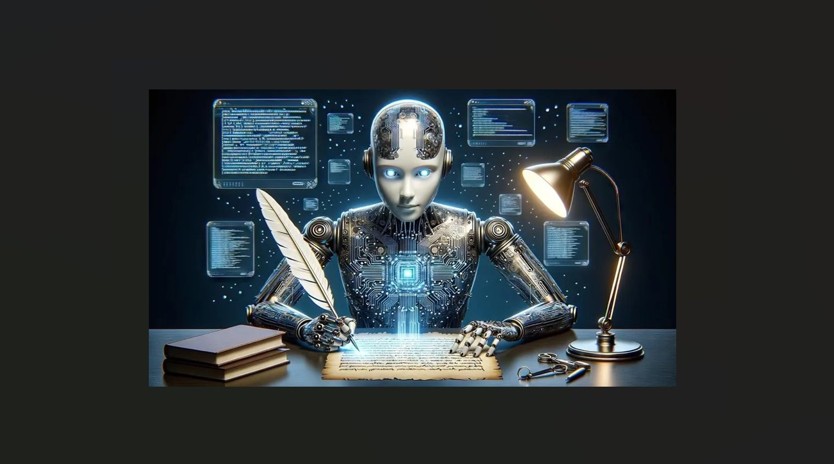

Artificial intelligence has been transforming our daily lives for years, quietly powering recommendation systems, voice assistants, and fraud detection. But a newer and more advanced branch of AI is now capturing widespread attention: generative AI. Unlike traditional AI systems that analyze data or make predictions, generative AI can create new content, opening possibilities that were once considered science fiction. Understanding this technology is crucial as it becomes a larger part of society, business, and creativity.
From Analysis to Creation: How Generative AI Is Different
Most AI systems today, like the ones behind search engines or spam filters, are designed to recognize patterns and make decisions. For instance, an AI that flags fraudulent credit card transactions does so by comparing a transaction against patterns in previous data. It cannot create a new transaction, story, or image—it simply evaluates and reacts based on what it has learned.
Generative AI, on the other hand, moves beyond recognition. It can generate something entirely new while still mimicking the patterns it learned from its training data. This capability sets it apart from “traditional” AI and represents a leap forward in sophistication.
In essence, traditional AI is reactive, while generative AI is creative.
What Generative AI Can Do
Generative AI can produce a wide range of outputs, including:
- Text: Writing essays, articles, poems, or code
- Images: Creating digital artwork, realistic photos, or illustrations from a written prompt
- Audio: Composing music, generating realistic speech, or even mimicking voices
- Video: Producing clips or animations, sometimes based on scripts or storyboards
For example, AI image generators can produce artwork in minutes that previously would have taken a human artist hours or days. Chatbots powered by generative AI, like some versions of ChatGPT, can write coherent, human-like responses to questions or prompts.
How Generative AI Learns
At the core of generative AI is a type of model trained on massive datasets. The system studies the relationships between words, pixels, sounds, or other data points, learning which elements tend to appear together. When asked to create something new, the AI uses these patterns to produce outputs that resemble the examples it has seen.
Importantly, generative AI does not store or copy content verbatim. It generates new outputs based on probabilities learned during training. This is why it can compose an original article, draw a new image, or even invent a melody, rather than just repeating something it has encountered before.
Real-World Applications
Generative AI is more than a technological curiosity—it is already influencing industries and everyday life:
- Creative Arts: Artists use AI to generate digital illustrations, concept art, or music. It can serve as a collaborator, inspiring human creativity.
- Writing and Content Creation: Businesses and media outlets leverage AI to draft reports, marketing copy, or social media content.
- Education: AI tutors can create custom practice questions or explanations tailored to a student’s needs.
- Healthcare: AI can simulate molecular structures or predict potential chemical compounds, speeding up drug discovery.
- Entertainment and Gaming: Generative AI can produce characters, levels, or storylines, enhancing user experiences in games and interactive media.
These examples show that generative AI is not just about novelty—it can accelerate workflows, reduce costs, and open entirely new opportunities.
Why Generative AI Feels So Advanced
Generative AI feels particularly advanced because it mimics one of the most human qualities: creativity. Traditional AI excels at tasks that have clear rules and patterns. Generative AI works in areas that are ambiguous and open-ended, like creating an image that matches a poetic description or writing a story from scratch.
This leap is largely made possible by deep learning models and massive computational power. These models can process enormous datasets, find patterns, and generate outputs that are often indistinguishable from those made by humans—at least at first glance.
Limitations and Challenges
Despite its promise, generative AI comes with challenges:
- Accuracy: AI can generate content that looks plausible but contains errors or misleading information. A generated article or image may be convincing but factually incorrect.
- Bias: Models can replicate biases present in their training data, creating outputs that reflect stereotypes or prejudices.
- Ethics and Intellectual Property: Who owns AI-generated content? Can AI recreate someone else’s work too closely? These questions are still being debated.
- Overreliance: Because generative AI can produce outputs so quickly, users may rely on it without critical review, which can lead to mistakes or misinformation.
How Generative AI Fits Into the Bigger AI Picture
Generative AI is a subset of artificial intelligence, distinct from traditional predictive or analytic AI. While most AI systems focus on understanding—like detecting fraud, recommending products, or predicting trends—generative AI focuses on producing. It combines pattern recognition with content creation, blurring the line between human and machine-generated outputs.
This distinction is important. It signals a shift in AI’s role: from a tool that supports decision-making to one that participates in creative processes.
Why Generative AI Matters for Society
Generative AI is important for several reasons:
- Innovation: It accelerates tasks that once required significant human effort. Artists, writers, and scientists can experiment more freely.
- Accessibility: People without specialized skills can now create content, design, or even basic software using AI.
- Economic Impact: Businesses can reduce costs, speed up processes, and open new markets using generative AI tools.
- Cultural Influence: AI-generated art, music, and literature are already shaping creative industries, influencing trends and styles.
However, its rise also demands caution. Society must balance the benefits of generative AI with ethical considerations, transparency, and oversight.
Looking Ahead
Generative AI is still in its early days. Researchers are working on improving accuracy, reducing bias, and creating models that can understand context more deeply. As computational power grows and training methods improve, generative AI is likely to become even more capable and integrated into daily life.
The potential is enormous: AI that can co-create with humans, assist in problem-solving, and explore new forms of expression. At the same time, careful management is needed to ensure that these tools are used responsibly, ethically, and inclusively.
Conclusion
Generative AI represents a major leap in artificial intelligence. Unlike traditional AI, which analyzes patterns and makes predictions, generative AI can create entirely new content, drawing from the patterns it has learned. Its applications span creativity, business, education, and science, making it one of the most exciting technological developments of our time.
Understanding what generative AI is, how it learns, and why it is distinct from other AI helps people grasp both its potential and its limitations. It is a tool that extends human capability, enabling faster creation, broader experimentation, and new forms of expression. As it continues to evolve, generative AI will reshape not only industries but also the ways we interact with technology—and with each other.