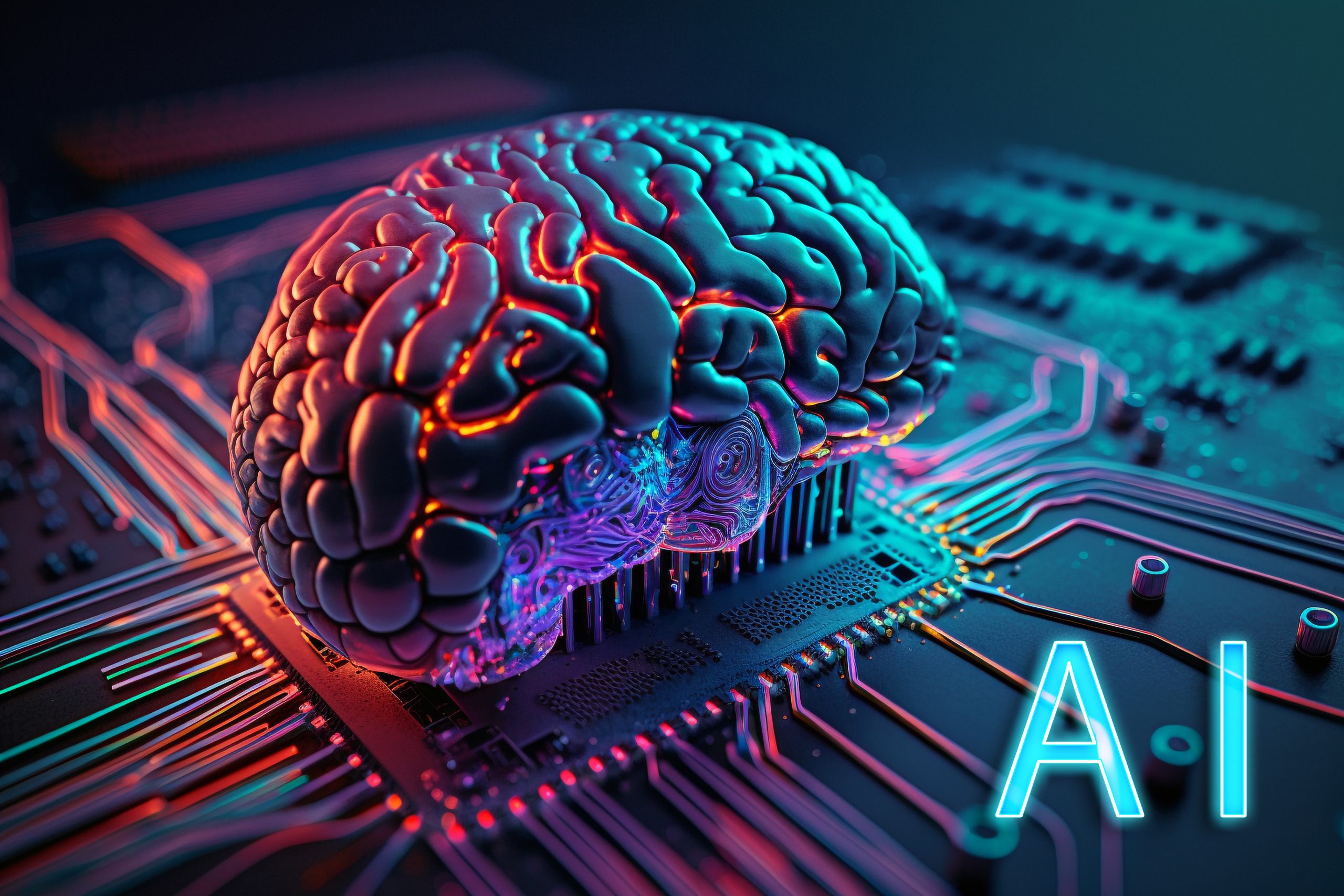

Artificial intelligence, commonly known as AI, has rapidly evolved from a futuristic concept into the tool of modern society. It recommends what people watch, unlocks smartphones with a glance, flags fraudulent bank transactions, powers customer-service chatbots, and increasingly assists with writing, art, medicine, and scientific discovery. Using immense processing power and data recognition, AI can mirror the defining factor of humanity: our intelligence. AI’s ability to actively comprehend, evaluate, and improve allows it to play a key role in reshaping how society functions.
Yet despite its growing presence, artificial intelligence remains confusing, or even intimidating, to many. Headlines can celebrate its breakthroughs or warn of its risks, and it is difficult to determine which sources are truthful. As the technology itself continues to become more prominent in everyday life, it is important to truly grasp the concepts behind such modern innovation.
So what exactly is artificial intelligence? How does it work behind the scenes? And why has it advanced so quickly in recent years? Understanding these questions is key to understanding one of the most significant technological shifts of the modern era.
Defining Artificial Intelligence
At its core, artificial intelligence refers to computer systems designed to perform tasks that typically require human intelligence. These tasks include recognizing speech, identifying images, understanding written language, making decisions, and learning from experience.
Traditional computer programs operate by following explicit, pre-written instructions. If a situation falls outside those instructions, the software fails. AI systems work differently. Rather than being told exactly what to do in every scenario, they are trained to recognize patterns in data and use those patterns to make predictions or educated decisions.
This ability to learn and adapt is what sets AI apart—and what makes it so powerful.
Despite popular portrayals, AI does not possess consciousness, emotions, or independent thought. Today’s systems do not “understand” the world in a human sense. Instead, they process vast amounts of information using mathematical models, identifying relationships in data and generating outputs based on probability.
Narrow AI vs. General AI
Nearly all artificial intelligence in use today is classified as narrow AI, or weak AI. Narrow AI is designed to perform a single specific task with extraordinary efficiency. This includes chatbots, language translation models, image generators, weather prediction models, etc.
In contrast, general AI refers to a hypothetical system capable of performing any intellectual task a human can, across many domains. Such a system would be able to reason, adapt, and transfer knowledge broadly. General AI does not currently exist, though it remains a topic of research and debate.
For now, AI systems remain specialized tools—powerful, but focused.
How AI Learns: The Role of Data
Data is the foundation of modern artificial intelligence.
Every digital interaction—online searches, social media posts, photos, videos, sensor readings—they all contribute to an ever-expanding pool of information. AI systems learn by analyzing these millions and billions of examples, and detect patterns humans could never identify manually at such scale.
This learning process is known as machine learning, a central branch of artificial intelligence. Instead of manually coding rules, engineers train algorithms on data and allow the system to improve through exposure and feedback.
The quality and quantity of data matter. In general, the more relevant, accurate data an AI system has access to, the better it performs. This recent explosion of digital data over the past two decades is one of the primary reasons AI has advanced so rapidly.
Machine Learning Explained
Machine learning generally falls into three main categories, each reflecting a different way machines learn from experience.
Supervised learning involves training an AI system using labeled examples. For instance, a spam-detection system is shown thousands of emails already marked as “spam” or “not spam,” allowing it to learn how to classify new messages.
Unsupervised learning removes labels entirely. The AI must identify patterns on its own, grouping similar data points together or detecting anomalies. This approach is often used in customer analysis, fraud detection, and system monitoring.
Reinforcement learning allows an AI system to learn through trial and error. It takes actions in an environment, receives feedback in the form of rewards or penalties, and gradually learns which strategies lead to better outcomes. This method has driven progress in robotics, gaming, and autonomous technologies.
Together, these approaches allow machines not just to follow instructions, but to improve with experience—a defining feature of artificial intelligence.
Neural Networks and Deep Learning
Many of today’s most advanced AI systems rely on neural networks, computational models that are structured similarly to the human brain.
Neural networks are made up of layers of interconnected nodes that process information step by step. Early layers detect simple features, while later layers identify more complex patterns. As information and datapoints run through the layers of nodes, the AI finds repetitive outcomes and discrepancies, allowing it to make a prediction or decision. When neural networks contain many layers, the approach is known as deep learning.
Deep learning has fueled breakthroughs in speech recognition, computer vision, natural language processing, and medical diagnostics. It allows AI systems to recognize faces, translate languages, and interpret complex images with remarkable accuracy.
Although these systems are not biological brains, their layered design enables them to capture complexity at a scale that was once unimaginable.
How Generative AI Works
One of the most striking recent developments in artificial intelligence is generative AI—systems capable of creating new content rather than simply analyzing existing data.
Generative AI models are trained on massive datasets and learn the statistical relationships between elements of that data. When prompted, they generate new text, images, audio, or video by predicting what is most likely to come next based on patterns they have learned.
These systems do not retrieve pre-written responses or recreate existing content. Instead, they produce new outputs based on probability. This is why generative AI can write essays or create artwork, but can also make confident-sounding mistakes.
Generative AI represents a symbolic shift in technology: machines are no longer limited to only calculation and computation—they are now participating in creation.
Why AI Is Advancing So Quickly
Artificial intelligence did not emerge overnight. Its rapid acceleration is the result of several factors working in tandem.
Computing power has increased dramatically, particularly through specialized hardware that is capable of handling heavy AI workloads. Algorithms have improved, becoming more efficient and effective at analyzing and learning from data. Investment from governments, universities, and private companies has surged, furthering research and deployment.
Most importantly, modern society produces data at unprecedented scale. AI thrives on information, and the digital world supplies it in abundance.
Together, these developments have enabled AI systems to grow faster, larger, and more capable than ever before.
AI in Everyday Life
Although AI can seem abstract, it is already deeply embedded in daily experience.
In healthcare, AI helps analyze medical images, predict disease risk, and accelerate research. In finance, it detects fraud and manages risk. In transportation, it powers navigation systems and driver-assistance technologies.
Education platforms use AI to personalize learning. Businesses rely on it to optimize supply chains, analyze markets, and improve customer service. Often, these systems operate invisibly, shaping outcomes without drawing attention to themselves.
This quiet integration has made AI one of the most influential technologies of the modern age.
Limitations and Challenges
Despite its capabilities, AI has clear limitations. It can reflect biases present in training data, misunderstand unfamiliar requests, and generate incorrect or misleading outputs. AI systems lack judgment, common sense, and moral understanding.
These shortcomings have raised concerns about privacy, security, job displacement, and ethical responsibility. As AI grows more powerful, decisions about how it is developed and deployed carry increasing weight.
The technology itself is neither beneficial nor harmful. Its impact depends on human choices.
A Marker of Human Progress
Artificial intelligence is more than a technical achievement. It is a reflection of humanity’s ability to encode knowledge and extend its reach through machines.
From early calculators to systems capable of generating language and images, AI marks a new chapter in the relationship between humans and technology. Its intelligence and creativity challenges the boundaries of machine capability.
As artificial intelligence continues to evolve, it will remain inseparable from modern society itself. Our current day and age is the genesis for AI, defined by rapid change, unprecedented power, and the responsibility that comes with both.